 ultimate-guide
Best Beard Care Routine for Itchy Skin
Last Updated: October 23, 2026
Quick Summary
The best beard care routine for itchy skin combines washing two to three times weekly with sulfate-free beard wash, conditioning after each wash, applying a non-comedogenic face moisturizer to damp skin, and using beard oil daily. This targeted approach addresses dryness, dead skin buildup, and irritation simultaneously, with most men seeing improvement within one to two weeks.
- Wash your beard two to three times per week with lukewarm water and sulfate-free beard wash, not daily, to preserve natural oils.
- Apply a lightweight, non-comedogenic face moisturizer to the skin under your beard while still damp after washing.
- Use beard oil formulated with jojoba or rosehip oil daily on damp hair to penetrate deep and provide intense moisture.
- Brush your beard daily with a boar bristle brush to distribute natural oils and remove dead skin cells between washes.
- Patch-test new products on your inner forearm for 24 to 48 hours and avoid fragrance, essential oils, and alcohol if your skin is reactive.
Table of Contents
- Why Your Beard Itches and How to Fix It
- How Often to Wash a Beard Without Making Itch Worse
- How to Stop Beard Itch: A Step-by-Step Cleansing Routine
- Beard Care for Sensitive Skin: Moisturizing and Conditioning
- Beard Oil vs Balm for Itchy Skin: Which Works Better
- Your Complete Daily Beard Care Routine for Itchy Skin
- When Itch Signals a Skin Condition: Knowing When to Seek Help
- Frequently Asked Questions
Why Your Beard Itches and How to Fix It
Beard itch is one of the most common complaints among men with facial hair, and the causes are more varied than most people realize. The best beard care routine for itchy skin addresses all of these issues simultaneously, not just one.
Beard hair traps dirt, product residue, and dead skin cells against your skin, creating an environment where irritation thrives. It's also coarser than scalp hair and pulls moisture from the skin beneath it, leaving the area dry and flaky.
The good news is that itching responds quickly to a targeted approach. By adjusting your washing frequency, choosing the right products, and establishing a consistent grooming routine, you can eliminate beard itch within one to two weeks.
How Often to Wash a Beard Without Making Itch Worse
Washing your beard too frequently is one of the biggest mistakes men make when dealing with itchy skin.
When you do wash, use lukewarm water rather than hot water. Hot water opens the hair cuticle and removes protective oils more aggressively, intensifying dryness and irritation.
The best frequency depends on your lifestyle and skin type: sensitive skin or a dry climate may call for twice weekly, while active sweaters can wash three times per week. The key is balancing cleanliness with the natural moisture your skin needs.
Between washes, use a beard brush with boar bristles to distribute natural oils through your beard and remove dead skin cells.
How to Stop Beard Itch: A Step-by-Step Cleansing Routine
Cleansing is foundational to stopping beard itch. Use a gentle, sulfate-free beard wash formulated for facial hair, not regular shampoo, which is designed for scalp hair and too harsh for the delicate skin on your face.
Here's the proper cleansing technique:
- Wet your beard thoroughly with lukewarm water, allowing the hair to soften and the pores to open slightly.
- Apply beard wash using about a quarter-sized amount. Work it into a lather by massaging gently with your fingertips, not your nails.
- Focus on the skin underneath by using your fingertips to massage the wash into the base of your beard where dead skin cells accumulate.
- Rinse thoroughly with lukewarm water until all soap is removed. Residual soap causes irritation and buildup.
- Gently squeeze out excess water, do not rub or wring your beard aggressively.
- Pat dry with a soft towel and leave your beard slightly damp for the next step (conditioning).
The whole process should take two to three minutes; rushing or scrubbing aggressively will irritate the skin further.
Beard Care for Sensitive Skin: Moisturizing and Conditioning
After cleansing, moisturizing decides whether your itch calms down or returns by mid-afternoon. Conditioning treats the beard hair; moisturizing treats the skin underneath. Sensitive skin needs both, chosen by ingredient rather than label claims.
Conditioner: what to look for and how to use it
Apply beard conditioner to damp hair right after washing, leave it one to two minutes, then rinse cool to smooth the cuticle and slow moisture loss. On reactive skin, favor conditioners listing water and a simple emollient (glycerin, jojoba, or squalane) near the top of the ingredients, and skip anything with a strong fragrance story on the front label.
Moisturizer: the step most men skip
Apply a lightweight, non-comedogenic face moisturizer to the skin under your beard while still damp so it absorbs instead of sitting on the surface. A lotion or gel-cream is usually enough and less likely to clog pores or leave residue that traps flakes.
Ingredient guidance for sensitive and allergy-prone skin
Read the full ingredient list, not just the marketing claims. A practical filter:
- Fragrance and parfum: the most common cause of contact reactions in cosmetics. If your skin is reactive, start with fragrance-free products.
- Essential oils: lavender, citrus, peppermint, tea tree, and eucalyptus smell great but are frequent irritants. 'Natural' does not mean non-irritating.
- Alcohol (denatured alcohol, SD alcohol): can sting and dry reactive skin, especially in leave-on products.
Patch-test before you commit
Before applying a new product to your beard, patch-test it: apply a small amount to the inner forearm or behind the ear, leave it 24 to 48 hours, and watch for redness, stinging, or bumps. A clear reaction is a strong reason to stop. Introduce one new product at a time so you can tell what caused a problem.
A decision path by skin type
- Dry and flaky: prioritize a fragrance-free conditioner plus a ceramide or glycerin moisturizer, and use beard oil sparingly on damp hair.
- Oily or acne-prone: choose a gel-cream moisturizer labeled non-comedogenic, keep oil to the beard ends rather than the skin, and wash more often if sweat and buildup are an issue.
- Reactive or allergy-prone: fragrance-free, essential-oil-free, alcohol-free products; patch-test everything; keep the routine short.
Beard Oil vs Balm for Itchy Skin: Which Works Better
The choice between beard oil and beard balm depends on your needs and beard length.
Beard balm is thicker and provides hold and styling while also conditioning. It's better suited for longer beards that need shaping.
For itchy skin, beard oil is usually the better choice because it addresses moisture directly.
The key is choosing products formulated for sensitive skin, fragrance-free options without harsh chemicals.
Your Complete Daily Beard Care Routine for Itchy Skin
A routine only works if it fits your beard, skin, and climate. Use the schedule below as a starting point, then adjust with the decision paths and troubleshooting guide that follow.
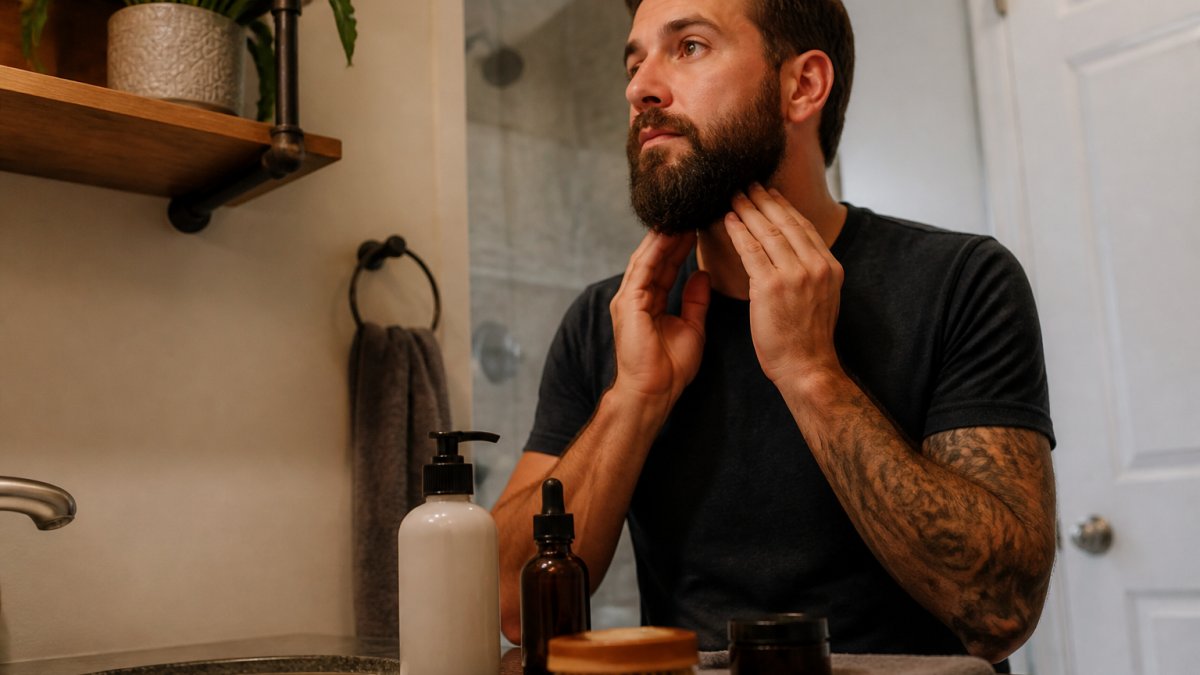
Morning routine (3 to 5 minutes)
- Rinse with cool water to remove overnight residue and wake up the beard.
- Apply a light beard oil to damp hair, focusing on the ends and the skin underneath.
- Comb through gently with a boar bristle brush to distribute oil and remove loose hairs.
- Apply beard balm only if you want hold or have a longer beard.
Evening routine (3 to 10 minutes)
- Wash two to three times per week with a sulfate-free beard wash; on non-wash days, rinse with cool water only.
- Condition on wash days, leave one to two minutes, rinse cool.
- Pat dry gently and leave slightly damp.
- Apply face moisturizer to the skin under the beard while damp.
- Apply beard oil to damp hair, roots to tips.
- Comb through with a boar bristle brush.
Adjust the routine to your situation
- Beard length: short stubble needs less oil and no balm; medium beards do well with oil daily and balm for styling; long beards benefit from oil at the roots plus balm through the length to protect ends.
- Skin type: dry skin needs more moisturizer and less washing; oily skin needs more frequent washing and lighter products; reactive skin needs fragrance-free everything and a short routine.
- Climate: in dry or cold weather, reduce wash frequency and increase moisturizer; in hot, humid weather, wash more often if sweat and buildup cause itch, and choose lighter products.
Troubleshooting persistent itch
Use this symptom-to-action guide when itch does not settle after two weeks:
- Itch worse right after washing: your wash is too harsh or too hot. Switch to a sulfate-free wash, lower the water temperature, and reduce frequency.
- Itch and flakes that build up between washes: dead skin and product residue are accumulating. Add gentle brushing and consider washing one extra time per week.
- Itch started after a new product: stop the product, patch-test it, and return to what worked. Fragrance and essential oils are common culprits.
| Step | Frequency | Best Time | Product Type |
|---|---|---|---|
| Wash beard | 2-3x weekly | Evening | Sulfate-free beard wash |
| Condition | 2-3x weekly | After wash | Beard conditioner |
| Moisturize skin | Daily | After wash or evening | Non-comedogenic face moisturizer |
| Apply beard oil | Daily | Morning and evening | Beard oil (jojoba or rosehip) |
| Brush beard | Daily | Morning and evening | Boar bristle brush |
| Cool water rinse | On non-wash days | Morning | Water only |
When Itch Signals a Skin Condition: Knowing When to Seek Help
While most beard itch comes from dryness and poor grooming habits, persistent itch can indicate an underlying skin condition that requires professional attention.
If your itch persists after two to three weeks of following a proper best beard care routine for itchy skin, or if you notice additional symptoms, consult a dermatologist. Red flags include severe redness, excessive flaking that looks like scales, pustules or sores, hair loss, or itch that spreads beyond your beard area. These symptoms can indicate conditions like seborrheic dermatitis, psoriasis, fungal infection, or contact dermatitis from a product ingredient.
If itch developed shortly after you changed beard products, you may have a sensitivity or allergy to an ingredient; fragrance, essential oils, and certain preservatives are common culprits.
Sensitive skin requires ingredient awareness. Many commercial beard products contain alcohol, synthetic fragrances, or sulfates that trigger irritation in reactive skin.
Beard itch doesn't have to be permanent. Our handcrafted solutions address sensitive skin concerns.
Frequently Asked Questions
What are the common causes of an itchy beard?
Beard itch typically stems from dry skin underneath facial hair, dead skin cell buildup (beardruff), irritation from coarse beard hair, or product buildup from infrequent washing. Sensitivity to fragrances, sulfates, or harsh ingredients can trigger irritation. In some cases, itch signals a fungal or bacterial infection, though this is less common. Identifying your specific cause, dryness, sensitivity, or buildup, determines which solution works best for your beard care routine.
How often should I wash my beard if my skin is itchy?
Wash your beard 2-3 times per week with a gentle, sulfate-free beard wash to avoid stripping natural oils that protect skin. Washing too frequently (daily) removes the skin barrier and worsens itch; washing too infrequently allows dead skin and product buildup to accumulate. Use lukewarm water, not hot, and always follow with a moisturizer or beard oil. Adjust frequency based on your skin type and climate, oily skin may tolerate 3 washes weekly, while dry or sensitive skin benefits from 2.
Should I use beard oil or balm for itchy skin?
Beard oil penetrates deeper into beard hair and the skin underneath, making it ideal for addressing dryness and itch. Balm sits on the surface and provides hold and shine but offers less moisture to irritated skin. For itchy skin, start with beard oil as your primary moisturizer, applying it to slightly damp beard hair after washing. Balm works best as a secondary product for styling or added texture once your itch is under control. Some people benefit from layering both: oil first, balm second.
What ingredients should I avoid if I have sensitive skin?
Avoid sulfates, which strip natural oils and worsen dryness; synthetic fragrances, which trigger irritation; alcohol, which dries skin; and silicones, which build up over time. Look for beard washes and oils labeled fragrance-free or with natural scents like cedarwood or tea tree. Ingredients like jojoba oil, rosehip oil, and glycerin support the skin barrier and reduce itch. If you have known allergies, patch-test new products on a small area first, or consult a dermatologist before introducing new grooming products.
When should I see a dermatologist about an itchy beard?
See a dermatologist if itch persists after 2-3 weeks of a consistent, gentle beard care routine; if you notice scaling, redness, or flakiness that doesn't improve with moisturizing; or if itch is severe enough to disrupt sleep or daily life. Persistent symptoms may indicate a fungal infection, bacterial infection, seborrheic dermatitis, or contact dermatitis, all treatable conditions. A dermatologist can prescribe medicated washes or treatments specific to your condition, ensuring your beard care routine addresses the root cause rather than just symptoms.
Can I use regular hair shampoo on my beard?
Regular hair shampoo is too harsh for beard hair and the sensitive skin underneath. Hair shampoos contain sulfates and ingredients designed for scalp hair, which is thicker and less prone to irritation. Beard hair is coarser but the skin beneath is more delicate and prone to dryness. A dedicated beard wash is gentler, sulfate-free, and formulated to clean without stripping natural oils. Using the wrong product will worsen itch, increase flakiness, and damage beard hair over time.
What's the difference between beardruff and a fungal infection?
Beardruff appears as white or gray flakes in the beard and is usually dry skin or dead skin cells caused by dryness, irritation, or product buildup. It improves with moisturizing, gentle cleansing, and beard oil. A fungal infection (like beard ringworm) causes itching, redness, inflammation, and flakes that persist despite moisturizing; it may also cause hair loss or pustules. If flakes don't improve after 2 weeks of proper beard care, or if you see redness or pustules, consult a dermatologist for diagnosis and treatment.
How long does it take for a beard care routine to stop itch?
Most people see improvement in beard itch within 1-2 weeks of starting a consistent routine with gentle washing, moisturizing, and conditioning. Severe dryness or buildup may take 3-4 weeks to fully resolve. Consistency matters more than speed, skipping steps or switching products frequently delays results. If itch persists after 4 weeks of a proper routine, the cause may be a skin condition requiring dermatological treatment rather than a grooming issue. Track your progress and adjust products if needed, but give each routine at least 2-3 weeks to work.